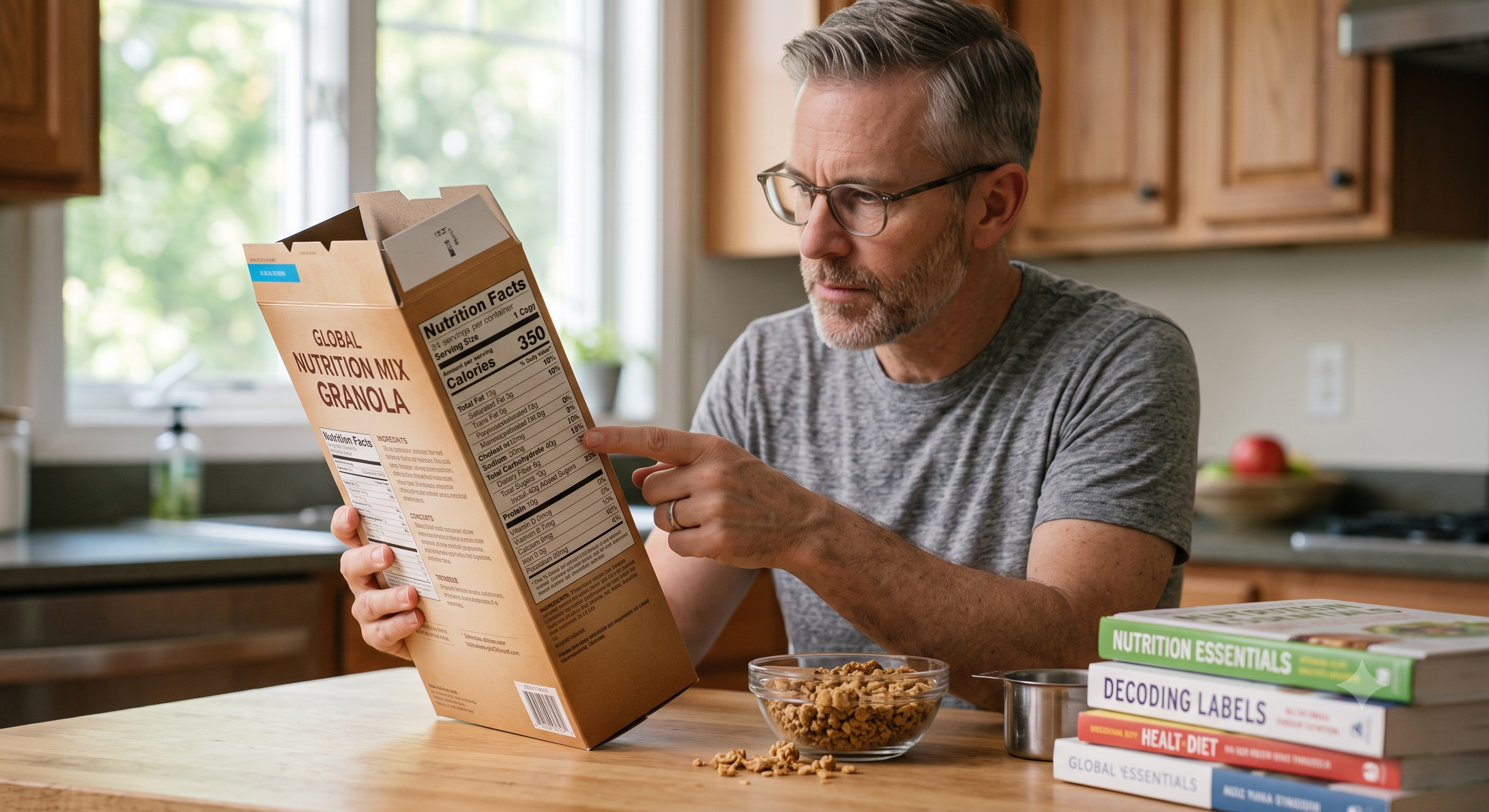
Standing in the grocery aisle, flipping a box around to check the nutrition label, only to feel more confused than informed, is a common experience. Between serving sizes, percentages, and a long list of nutrients, it's easy to see why so many people just give up and guess. But once you understand what actually matters on a nutrition label, reading one takes just a few seconds and can genuinely improve the choices you make. Here's exactly how to do it.
Step 1: Always Start With the Serving Size
This is the single most important, and most commonly overlooked, part of any nutrition label. Every number on the label, calories, fat, sugar, and everything else, is based on the listed serving size, not the entire package.
Why this matters: A bag of chips might list 150 calories per serving, but if the bag contains three servings and you eat the whole thing, you've actually consumed 450 calories, not 150.
What to do: Check the serving size first, then check how many servings are actually in the package before looking at any other numbers.
Step 2: Look at Total Calories
Once you know the serving size, check the calorie count for that serving. This gives you a baseline understanding of how energy-dense the food is, though calories alone don't tell the whole nutritional story.
Step 3: Check the Percent Daily Value (%DV)
The %DV column tells you how much a nutrient in one serving contributes to your total daily recommended intake, based on a standard 2,000-calorie diet.
A simple rule of thumb:
-
5% DV or less is considered low for that nutrient
-
20% DV or more is considered high for that nutrient
This quick reference makes it much easier to judge whether a food is high in something you want to limit, like sodium, or something you want to get more of, like fiber.
Step 4: Pay Close Attention to These Key Nutrients
Added Sugars
This is one of the most important numbers to check, especially since many packaged foods contain surprising amounts of hidden sugar. The American Heart Association recommends limiting added sugars to about 25 grams per day for women and 36 grams for men.
Look specifically for "added sugars," not just "total sugars," since total sugars include naturally occurring sugars from things like fruit or dairy, which aren't a concern in the same way.
Sodium
High sodium intake is linked to increased blood pressure and heart disease risk. Many packaged and processed foods contain far more sodium than people realize. Aim to keep individual servings under 5% DV when possible, especially if you're eating multiple packaged items in a day.
Fiber
Fiber supports digestion, blood sugar regulation, and heart health, yet most people don't get enough. Look for foods with at least 3 grams of fiber per serving, with 5 grams or more considered a good source.
Saturated Fat
While not inherently dangerous in moderate amounts, high saturated fat intake is linked to increased cholesterol levels for some people. Keeping this number moderate, generally under 10% of total daily calories, is a reasonable general guideline.
Protein
Especially important for those focused on muscle maintenance, satiety, or active lifestyles. Checking protein content helps you understand whether a food will genuinely keep you full or is mostly empty calories.
Step 5: Check the Ingredients List Too
While technically separate from the nutrition facts panel, the ingredients list provides essential context. Ingredients are listed in order of quantity, meaning the first few ingredients make up the bulk of the product.
Red flags to watch for:
-
Added sugar listed among the first three ingredients (even under different names like corn syrup, dextrose, or cane juice)
-
A very long list of ingredients, particularly hard-to-recognize additives
-
Multiple types of added sugar listed separately, which can disguise the true total sugar content
Understanding Confusing Label Terms
"Reduced sugar" or "reduced fat": This means the product has less of that nutrient compared to the original version, not that it's necessarily low in that nutrient overall.
"Multigrain": This doesn't necessarily mean whole grain. Always check for "100% whole grain" or "whole wheat" specifically listed as the first ingredient if that's your goal.
"No sugar added": This means no sugar was added during processing, but the product may still contain naturally occurring sugars, and doesn't necessarily mean it's low in carbohydrates overall.
"Natural": As mentioned in supplement labeling, this term is largely unregulated for food products too and doesn't guarantee a health benefit.
A Simple 3-Step Method for Quick Label Checks
If you don't have time for a deep analysis every time you shop, use this quick three-step method:
-
Check the serving size to understand what the numbers actually represent
-
Scan for added sugar and sodium, since these are the two nutrients most commonly consumed in excess
-
Check fiber and protein, since higher amounts of both generally indicate a more filling, nutritious choice
This quick method takes just a few seconds per product but provides meaningful insight into overall food quality.
Comparing Similar Products
Nutrition labels are especially useful for comparing similar products side by side. When choosing between two brands of the same food, like pasta sauce or granola bars, compare:
-
Calories per serving (using the same serving size for accurate comparison)
-
Added sugar content
-
Sodium levels
-
Fiber and protein content
This side-by-side comparison often reveals significant differences between products that appear similar at first glance.
Common Mistakes People Make When Reading Labels
Ignoring serving size entirely and assuming the listed numbers apply to the whole package.
Focusing only on calories while ignoring more important factors like added sugar, fiber, and overall ingredient quality.
Trusting front-of-package marketing claims without verifying them against the actual nutrition facts panel.
Overlooking the ingredients list and relying solely on the numbers, missing important context about food quality.
Why This Skill Matters Long-Term
Learning to read nutrition labels efficiently isn't about obsessively tracking every gram of every nutrient. It's about developing the ability to make quick, informed choices at the grocery store that align with your overall health goals, without needing to overanalyze every purchase.
The Bottom Line
Nutrition labels don't have to be confusing once you know where to focus your attention. By checking the serving size first, then scanning key nutrients like added sugar, sodium, fiber, and protein, you can make smarter food choices in just a few seconds. Combined with a quick glance at the ingredients list, this simple approach gives you real insight into what you're actually eating, without needing a nutrition degree to figure it out.