You can have the perfect mattress, blackout curtains, and a solid bedtime routine, but if your room is too hot or too cold, none of it matters much. Temperature is one of the most underrated factors in sleep quality, and research shows it plays a bigger role than most people realize. Let's look at what science actually says about the ideal sleep temperature and how to get your bedroom just right.
Why Temperature Matters So Much for Sleep
Your body relies on a natural drop in core temperature to initiate and maintain sleep. This process is controlled by your circadian rhythm, your internal 24-hour clock. In the evening, your body temperature begins to fall, signaling to your brain that it's time to wind down. This drop continues through the night, reaching its lowest point in the early morning hours before rising again as you wake up.
If your bedroom environment fights against this natural temperature drop, either by being too warm or forcing your body to overheat, it becomes much harder to fall asleep and stay asleep through the night.
What Does Research Say Is the Ideal Sleep Temperature?
Most sleep research points to a range of 60 to 67 degrees Fahrenheit (15.5 to 19.4 degrees Celsius) as the optimal temperature for quality sleep. Within this range, your body can maintain its natural temperature drop without working too hard to cool down or warm up.
Temperatures above 71°F (21°C) or below 54°F (12°C) have been shown to disrupt sleep quality, leading to more nighttime awakenings and less time spent in deep, restorative sleep stages.
Why Being Too Hot Is Worse Than Being Too Cold
Interestingly, research suggests that overheating disrupts sleep more significantly than being slightly cold. When your bedroom is too warm, your body struggles to release heat effectively, which interferes with the temperature drop needed to enter and maintain deep sleep. This is part of why hot summer nights often feel harder to sleep through than cool winter ones, even with blankets.
Being too cold, on the other hand, is generally easier to fix, simply by adding another blanket, whereas being too hot often leaves people tossing off covers, adjusting fans, and waking up repeatedly throughout the night.
How Temperature Affects Different Sleep Stages
Temperature doesn't just affect how quickly you fall asleep, it also influences the quality of your sleep cycles.
REM Sleep: During REM sleep, your body's ability to regulate temperature is temporarily reduced, making you more sensitive to an overly hot or cold environment during this stage. This is part of why uncomfortable room temperatures often lead to more vivid, disrupted dreams or frequent waking during REM periods.
Deep Sleep: Deep sleep, the most restorative stage, is particularly sensitive to overheating. Studies show that when the environment is too warm, people spend less time in deep sleep and more time in lighter, less restful sleep stages.
Factors That Affect Your Ideal Sleep Temperature
While 60 to 67°F is a solid general guideline, personal factors can shift what feels ideal for you specifically:
- Age: Older adults often have a harder time regulating body temperature and may need a slightly warmer room compared to younger adults.
- Hormonal Changes: Women going through menopause frequently experience night sweats and hot flashes, often requiring a cooler sleep environment than average.
- Body Composition: People with more body fat tend to retain heat more easily and may sleep better in cooler rooms, while those with less body fat may need slightly warmer conditions.
- Activity Level: People who exercise in the evening may have a higher core body temperature at bedtime and benefit from a cooler room to help facilitate the natural temperature drop.
- Bedding and Sleepwear: Heavy blankets or non-breathable pajama fabrics can trap heat, effectively raising your sleep temperature even if the thermostat says otherwise.
Signs Your Room Temperature Is Disrupting Your Sleep
- Waking up sweaty or overheated during the night
- Frequently kicking off blankets, then feeling cold shortly after
- Restless, tossing-and-turning sleep
- Waking up with a headache, a common sign of overheating during sleep
- Feeling excessively groggy despite a full night's sleep
Practical Tips to Optimize Your Sleep Temperature

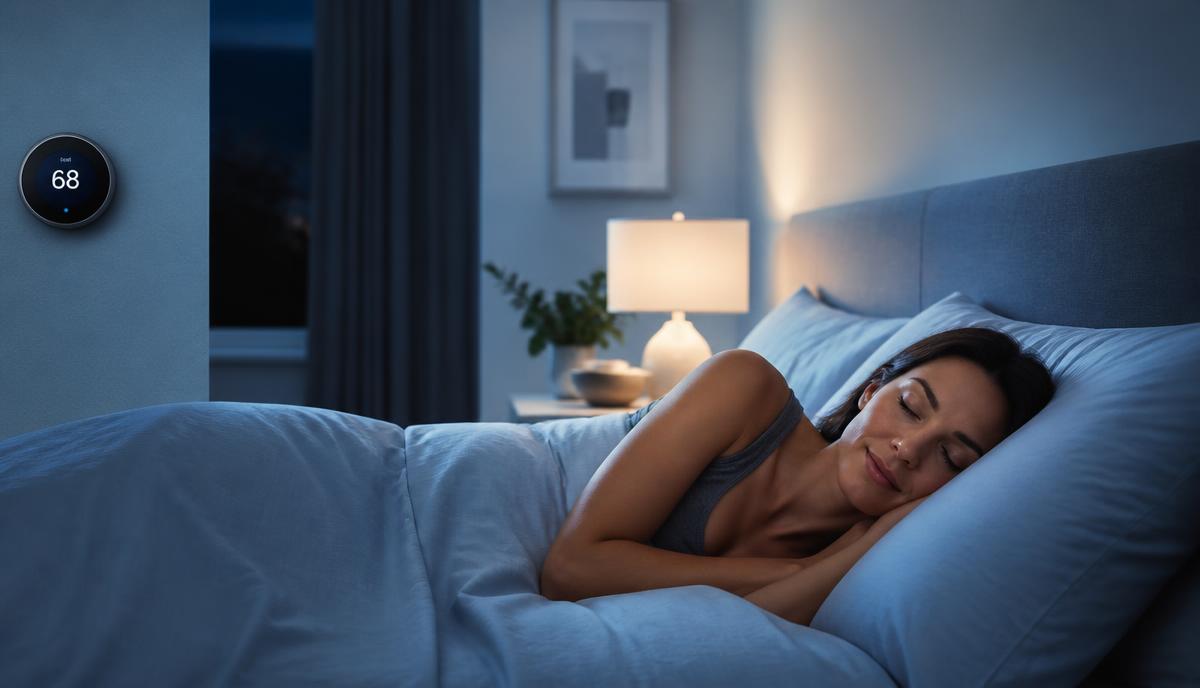
- Set Your Thermostat Before Bed. If possible, program your thermostat to lower slightly in the evening, mimicking your body's natural temperature drop and making it easier to fall asleep.
- Choose Breathable Bedding. Cotton, bamboo, and linen sheets allow better airflow compared to synthetic materials, helping regulate temperature throughout the night.
- Layer Your Blankets. Rather than one heavy blanket, use layered, lighter blankets that can be easily added or removed depending on comfort throughout the night.
- Take a Warm Shower Before Bed. This might seem counterintuitive, but a warm shower before bed causes your body temperature to rise temporarily, followed by a rapid drop afterward, which can actually help trigger sleepiness.
- Use a Fan or Cooling Mattress Pad. For those who run hot at night or live in warmer climates, a fan or cooling mattress pad can help maintain a comfortable temperature without requiring extreme thermostat settings.
- Keep Feet Uncovered If Needed. Interestingly, some people sleep better with their feet slightly exposed, as feet play a role in heat dissipation. If you tend to overheat, sleeping with socks off or one foot outside the blanket can help regulate temperature.
- Avoid Heavy Meals or Alcohol Before Bed. Both digestion and alcohol metabolism raise your core body temperature, which can interfere with the natural cooling process needed for quality sleep.
Does Temperature Preference Change With the Seasons?
Yes, to some degree. Many people naturally prefer slightly cooler room temperatures in the summer and marginally warmer temperatures in the winter. However, the core range of 60 to 67°F still generally applies year-round for most people, with adjustments made through bedding and sleepwear rather than dramatic thermostat changes.
What About Nap Temperature?
The same principles apply to daytime naps. A cooler, dark environment supports faster, more restful napping, even during short 20 to 30 minute naps. If you nap in a warm, bright room, you're likely to experience lighter, less refreshing rest.
Temperature is a simple, often overlooked factor that has a significant impact on how well you sleep. Research consistently points to 60 to 67 degrees Fahrenheit as the ideal range for most people, with overheating being particularly disruptive to deep, restorative sleep stages. By adjusting your thermostat, bedding, and pre-sleep habits to support your body's natural temperature drop, you can noticeably improve both how quickly you fall asleep and how rested you feel each morning.