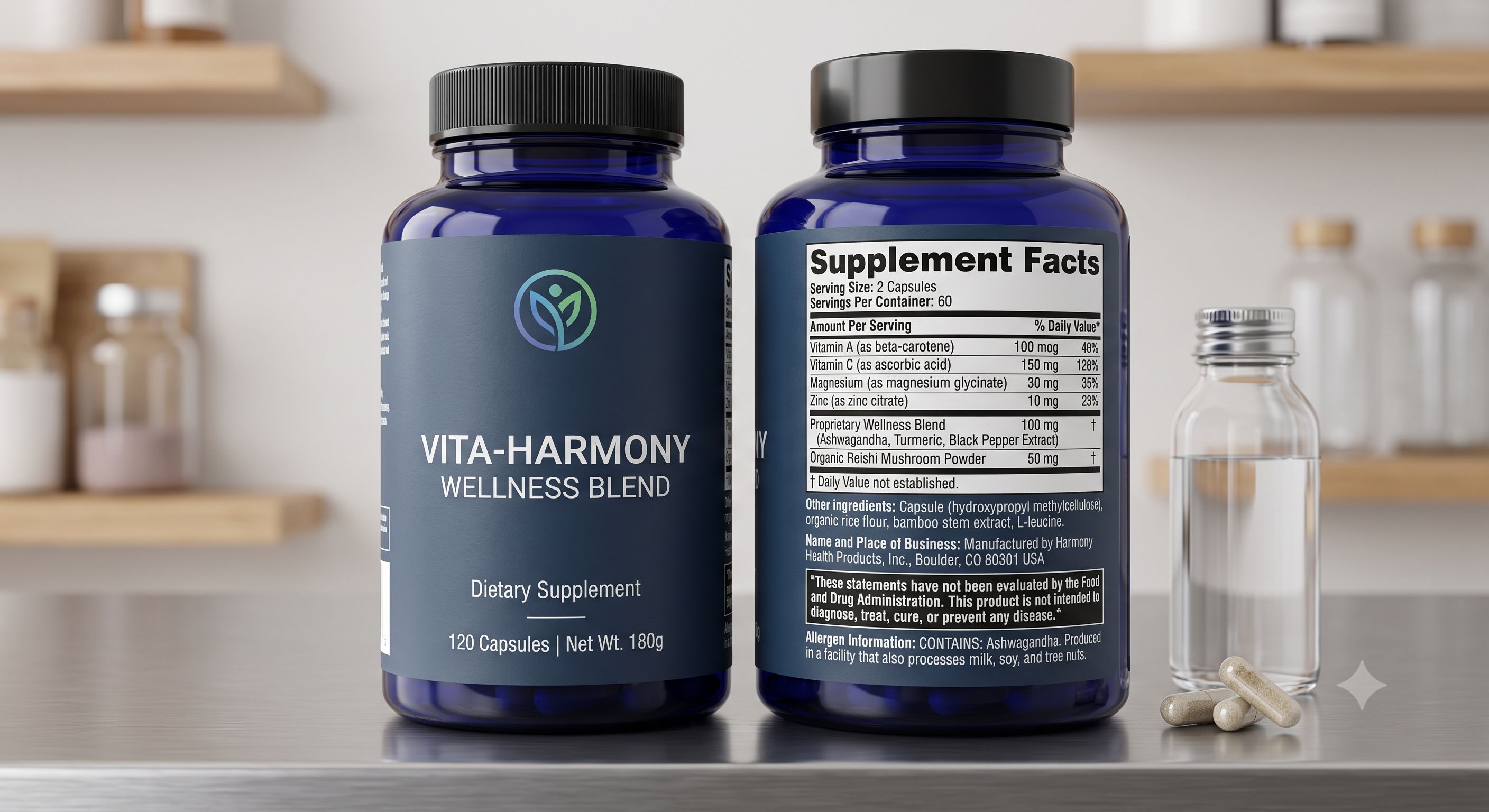
Walk into any pharmacy or health store and you'll be bombarded with hundreds of supplement options, each label promising something different. Between confusing ingredient names, vague marketing claims, and tiny print, it's no wonder most people just grab a bottle and hope for the best. But learning to actually read a supplement label can help you avoid wasting money, protect your health, and choose products that genuinely deliver what they claim. Here's a step-by-step guide to decoding what's really on that label.
Step 1: Check the Supplement Facts Panel
This is the most important section on any supplement label, similar to the Nutrition Facts panel on food products. It lists exactly what's in the product and how much of each ingredient is included per serving.
Look for:
-
Serving size: This tells you exactly how much you need to take to get the listed amounts. Some products require multiple capsules per serving, which affects both dosage and how long a bottle actually lasts.
-
Amount per serving: This shows the exact quantity of each active ingredient, usually in milligrams (mg) or micrograms (mcg).
-
% Daily Value (%DV): This percentage shows how much of your daily recommended intake one serving provides, based on general nutritional guidelines.
Step 2: Look at the Active Ingredients Closely
Many supplements combine multiple ingredients into one product. It's important to check that the doses of key ingredients are actually meaningful, rather than just present in trace amounts for marketing purposes.
Watch out for "proprietary blends." These list a combination of ingredients under one name and total weight, without breaking down how much of each specific ingredient is actually included. This makes it impossible to know if you're getting an effective dose of any single component.
Example: A label might say "Energy Blend: 500mg" listing five different ingredients. Without individual amounts, you have no way to know if you're getting a therapeutic dose of any of them.
Step 3: Check the "Other Ingredients" List
Beyond the active ingredients, most supplements include fillers, binders, and additives to help form the pill, capsule, or powder. While many of these are harmless, some people need to watch for:
-
Allergens: Soy, dairy, gluten, or shellfish-derived ingredients
-
Artificial colors and dyes: Some people prefer to avoid these
-
Unnecessary fillers: Ingredients like magnesium stearate or silicon dioxide are generally considered safe but are worth knowing about if you're trying to minimize additives
Step 4: Understand Ingredient Forms
Not all forms of a nutrient are absorbed equally by your body. This is one of the most overlooked aspects of reading supplement labels.
Example: Magnesium
-
Magnesium oxide is cheap but poorly absorbed
-
Magnesium glycinate or citrate are more bioavailable and often better tolerated
Example: Vitamin D
-
Vitamin D3 (cholecalciferol) is generally more effective at raising blood levels than vitamin D2 (ergocalciferol)
Example: Omega-3s
-
Triglyceride form is typically better absorbed than ethyl ester form
Checking the specific form of an ingredient can help you avoid paying for a product that your body doesn't absorb well.
Step 5: Look for Third-Party Testing Seals
Unlike prescription medications, supplements aren't required to undergo rigorous FDA testing before hitting the shelves. This makes third-party testing seals especially important for verifying quality and safety.
Common seals to look for include:
-
USP (U.S. Pharmacopeia)
-
NSF International
-
ConsumerLab
-
Informed Choice (especially important for athletes concerned about banned substances)
These certifications confirm that the product contains what it claims, in the amounts listed, and is free from harmful contaminants.
Step 6: Check the Expiration Date and Storage Instructions
Supplements can lose potency over time, especially if stored improperly. Always check the expiration date before purchasing, and follow storage instructions, since some supplements, like probiotics, may require refrigeration to remain effective.
Step 7: Watch for Red Flag Marketing Claims
Certain phrases on supplement labels should raise a red flag rather than build confidence:
-
"Miracle cure" or "guaranteed results": No supplement can legally guarantee a specific health outcome
-
"Detoxifies your body": This is a vague, often unsubstantiated claim, since your liver and kidneys already handle detoxification naturally
-
"Doctor recommended" without specifics: This phrase means little without context on which doctors or based on what evidence
-
Extremely high dosages: More isn't always better, and some vitamins and minerals can be harmful in excessive amounts
Step 8: Compare Cost Per Serving, Not Just Bottle Price
A bottle that costs less upfront might actually be more expensive per serving if it requires a higher dose or has fewer servings per container. Always calculate:
Cost per serving = Total bottle price ÷ Number of servings
This allows for an accurate comparison between similar products, rather than being misled by price alone.
Understanding Common Label Terms
"Natural": This term is largely unregulated and doesn't guarantee safety, effectiveness, or quality.
"Organic": This does have specific regulatory requirements and generally means the ingredients were grown without synthetic pesticides or fertilizers.
"Non-GMO": Indicates the product doesn't contain genetically modified ingredients, though this doesn't necessarily relate to safety or effectiveness.
"Clinically studied" or "clinically proven": Look for specifics. Was the exact dosage and form used in the product actually the one studied? Vague claims without specific references should be viewed cautiously.
Why the FDA's Role Matters (And Its Limits)
Unlike prescription drugs, dietary supplements aren't required to prove effectiveness or safety before being sold. The FDA only steps in after a product is on the market if problems are reported. This is exactly why third-party testing and careful label reading matter so much, you're largely responsible for verifying quality yourself.
Questions to Ask Before Buying Any Supplement
-
Does the label clearly list the exact dose of each active ingredient?
-
Is the ingredient form one that's known to be well-absorbed?
-
Is there a third-party testing seal present?
-
Are the marketing claims realistic and specific, rather than vague or exaggerated?
-
Does the cost per serving align with the value you're getting?
When to Talk to a Healthcare Provider
Before starting any new supplement, especially if you take prescription medications or have existing health conditions, it's worth discussing it with your doctor or pharmacist. Certain supplements can interact with medications or aren't appropriate for specific health conditions, even if they're generally considered safe for the general population.
The Bottom Line
Supplement labels contain far more useful information than most people realize, if you know what to look for. By checking serving sizes, ingredient forms, proprietary blends, and third-party testing seals, you can make far more informed decisions about what you're actually putting into your body. A little label-reading knowledge goes a long way toward avoiding wasted money and choosing supplements that genuinely support your health goals.