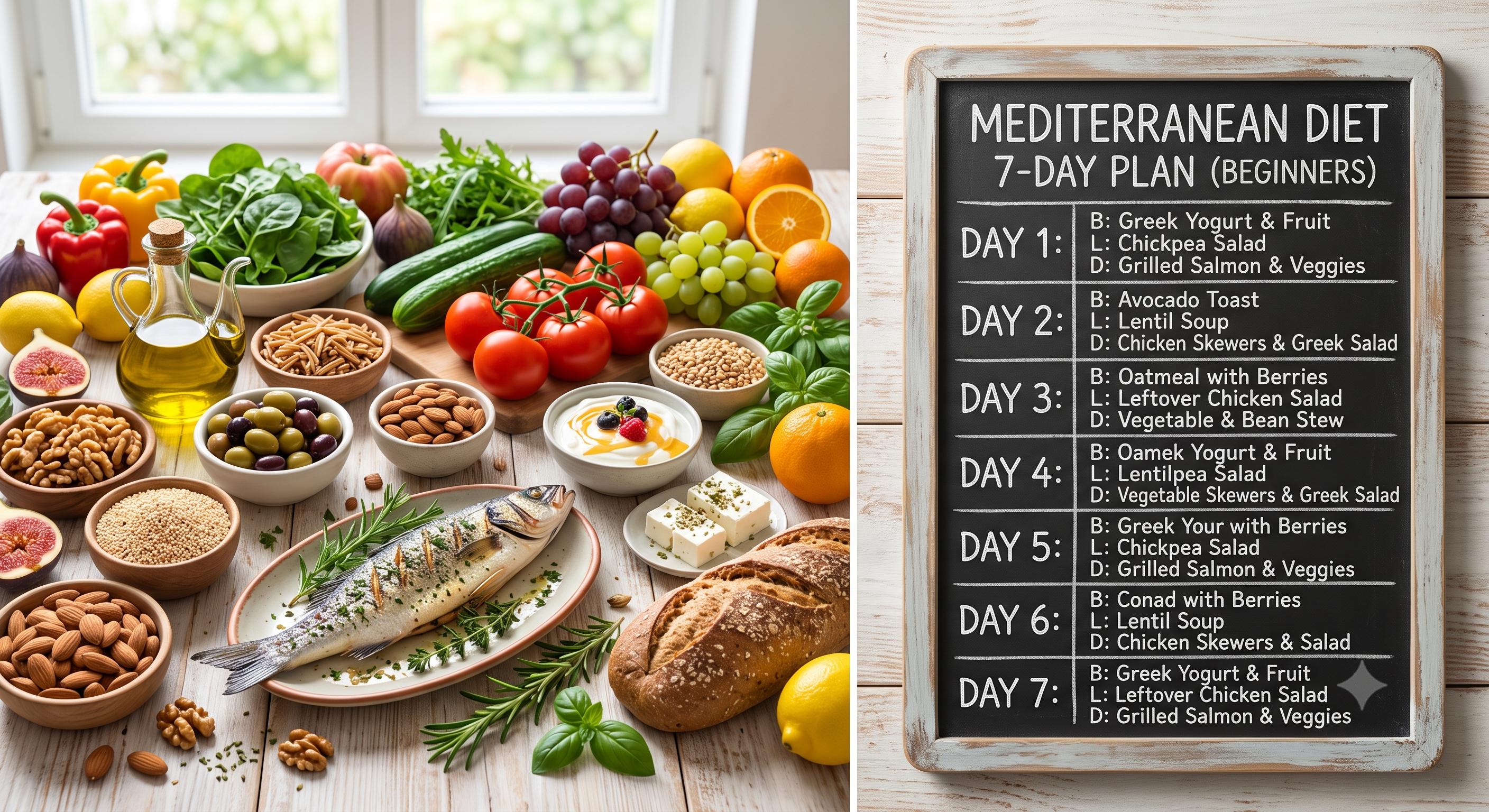
If you've been looking for an eating pattern that's actually backed by decades of research, rather than another restrictive fad diet, the Mediterranean diet is worth serious consideration. Inspired by the traditional eating habits of countries like Greece, Italy, and Spain, this approach focuses on whole foods, healthy fats, and balanced nutrition rather than strict rules or calorie counting. Let's break down exactly what it involves and how to get started with a full week's worth of meals.
What Is the Mediterranean Diet?
The Mediterranean diet isn't a rigid diet plan with strict rules, it's more of a flexible eating pattern based on the traditional foods historically eaten in Mediterranean countries. It emphasizes vegetables, fruits, whole grains, legumes, healthy fats like olive oil, and moderate amounts of fish and poultry, while limiting red meat, processed foods, and added sugars.
Research has consistently linked this eating pattern to reduced risk of heart disease, improved brain health, better blood sugar control, and even increased longevity, making it one of the most well-supported diets by scientific evidence.
Core Foods to Eat
Vegetables and Fruits
Aim to fill half your plate with a variety of colorful vegetables and fruits at most meals. Leafy greens, tomatoes, cucumbers, peppers, and citrus fruits are all staples.
Whole Grains
Choose whole grains like brown rice, quinoa, farro, and whole wheat bread over refined, processed grains.
Healthy Fats
Olive oil is the primary fat source in the Mediterranean diet, used generously in cooking and dressings. Nuts, seeds, and avocados also provide healthy fat sources.
Legumes
Beans, lentils, and chickpeas serve as excellent plant-based protein sources and are a staple across Mediterranean cuisines.
Fish and Seafood
Fatty fish like salmon, sardines, and mackerel are recommended at least twice a week due to their high omega-3 content.
Poultry, Eggs, and Dairy
These are included in moderation, poultry and eggs a few times a week, and dairy like yogurt and cheese in reasonable portions.
Herbs and Spices
Fresh herbs like basil, oregano, and rosemary are used generously, both for flavor and their natural antioxidant properties.
Foods to Limit
-
Red meat (limited to a few times per month)
-
Processed meats like bacon and sausage
-
Refined sugars and sweets
-
Highly processed, packaged foods
-
Refined grains like white bread and white rice
-
Excessive alcohol (red wine in moderation is sometimes included, but isn't necessary)
Benefits of the Mediterranean Diet
Heart Health: Numerous studies link this eating pattern to reduced risk of heart disease and improved cholesterol levels, largely due to its emphasis on healthy fats and reduced processed food intake.
Brain Health: Research suggests the Mediterranean diet may help reduce the risk of cognitive decline and support long-term brain health.
Blood Sugar Control: The diet's emphasis on fiber-rich whole foods and healthy fats supports more stable blood sugar levels compared to diets high in refined carbohydrates.
Weight Management: While not designed specifically for weight loss, many people find the diet naturally supports a healthy weight due to its focus on whole, satisfying foods.
Longevity: Some of the longest-living populations in the world, particularly in Mediterranean regions, follow eating patterns closely aligned with this diet.
A Simple 7-Day Mediterranean Diet Plan for Beginners
Day 1
-
Breakfast: Greek yogurt with honey, walnuts, and fresh berries
-
Lunch: Chickpea salad with cucumber, tomato, feta, and olive oil dressing
-
Dinner: Grilled salmon with roasted vegetables and quinoa
Day 2
-
Breakfast: Whole grain toast with mashed avocado and a poached egg
-
Lunch: Lentil soup with a side salad
-
Dinner: Grilled chicken with a Greek salad and whole wheat pita
Day 3
-
Breakfast: Oatmeal topped with almonds and sliced banana
-
Lunch: Whole grain wrap with hummus, spinach, and roasted vegetables
-
Dinner: Baked cod with sautéed greens and brown rice
Day 4
-
Breakfast: Greek yogurt with sliced peaches and a drizzle of honey
-
Lunch: Quinoa salad with chickpeas, cucumber, and lemon-olive oil dressing
-
Dinner: Grilled shrimp skewers with roasted zucchini and couscous
Day 5
-
Breakfast: Whole grain toast with olive oil, tomato, and a sprinkle of oregano
-
Lunch: Mediterranean tuna salad with olives, tomato, and olive oil
-
Dinner: Baked chicken thighs with roasted sweet potatoes and steamed broccoli
Day 6
-
Breakfast: Smoothie with spinach, banana, Greek yogurt, and almond milk
-
Lunch: Falafel with tabbouleh salad and whole wheat pita
-
Dinner: Grilled vegetable and halloumi skewers with a side of farro
Day 7
-
Breakfast: Whole grain pancakes topped with fresh berries and a drizzle of honey
-
Lunch: Mediterranean grain bowl with farro, roasted vegetables, and tahini dressing
-
Dinner: Baked salmon with a Greek salad and roasted potatoes
Tips for Success as a Beginner
Start gradually. You don't need to overhaul your entire diet overnight. Begin by swapping butter for olive oil, adding more vegetables to meals, and incorporating fish once or twice a week.
Meal prep when possible. Preparing grains, roasted vegetables, and proteins in advance makes it easier to assemble Mediterranean-style meals throughout the week.
Focus on variety. The Mediterranean diet isn't about eating the same few foods repeatedly, it thrives on variety across vegetables, proteins, and whole grains.
Don't fear healthy fats. Many people are conditioned to avoid fat entirely, but olive oil, nuts, and avocados are core components of this diet's health benefits.
Make it social. Traditional Mediterranean eating often involves shared meals with family and friends, an aspect of the lifestyle that also supports mental well-being.
Common Mistakes Beginners Make
-
Overdoing cheese and processed Mediterranean-style products, like store-bought hummus loaded with preservatives
-
Skipping the fish component entirely, missing out on key omega-3 benefits
-
Not using enough olive oil, which is meant to be a primary fat source, not used sparingly
-
Treating it as a short-term diet rather than a sustainable, long-term eating pattern

Is the Mediterranean Diet Right for Everyone?
While generally considered safe and beneficial for most people, those with specific dietary restrictions, kidney issues requiring potassium limits, or particular allergies should consult a doctor or registered dietitian before making significant dietary changes.
The Bottom Line
The Mediterranean diet stands out among eating patterns for one simple reason: it's backed by decades of research and doesn't rely on restriction or deprivation. By focusing on whole foods, healthy fats, and balanced meals, this approach offers a sustainable way to support heart health, brain function, and overall well-being. With the 7-day plan above as a starting point, you can begin experiencing the benefits of this time-tested way of eating right away.