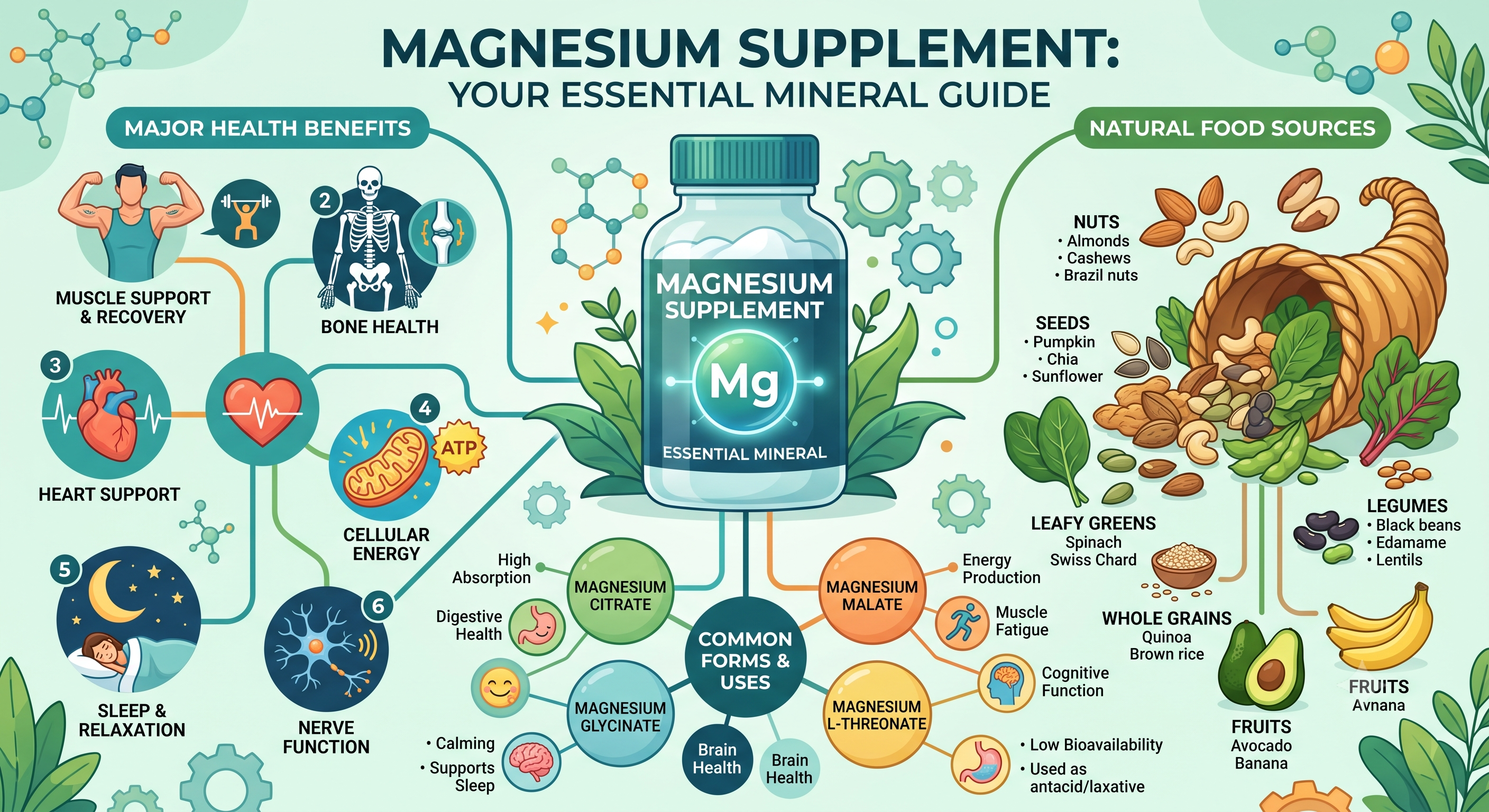
Magnesium has become one of the most talked-about supplements in recent years, and for good reason. It's involved in over 300 biochemical reactions in your body, from muscle function to sleep regulation to stress management. But walk into any supplement aisle and you'll find dozens of magnesium products, each claiming to be the best. Not all magnesium supplements are created equal, and choosing the wrong one can mean wasting money or not getting the benefits you're hoping for. Here's exactly what to look for.
Why Magnesium Matters So Much
Magnesium plays a role in muscle relaxation, nerve function, blood sugar regulation, blood pressure control, and even bone health. It's also closely tied to sleep quality and stress management, which is part of why magnesium supplements have become so popular for those dealing with anxiety, poor sleep, or muscle cramps.
Despite its importance, studies suggest a significant portion of adults don't get enough magnesium through diet alone, making supplementation a reasonable consideration for many people.
Step 1: Understand That Not All Magnesium Forms Are the Same
This is the single most important factor when choosing a magnesium supplement. Different forms of magnesium are absorbed differently by your body and are better suited for different purposes.
Magnesium Citrate
Well-absorbed and commonly used for general supplementation. It also has a mild laxative effect, making it a popular choice for those dealing with occasional constipation.
Magnesium Glycinate
Bound to the amino acid glycine, this form is known for being gentle on the stomach and highly bioavailable. It's often recommended specifically for sleep support and anxiety relief, since glycine itself has calming properties.
Magnesium Oxide
This form has a high magnesium content by weight but is poorly absorbed by the body. It's commonly found in cheaper supplements and is more likely to cause digestive discomfort without providing significant absorbed magnesium.
Magnesium Malate
Bound to malic acid, this form is well-absorbed and often recommended for those dealing with fatigue or muscle pain, since malic acid plays a role in energy production.
Magnesium L-Threonate
This form is particularly notable for its ability to cross the blood-brain barrier effectively, making it a popular choice for those focused on cognitive support and brain health.
Magnesium Chloride
Often used in topical products like magnesium oil or lotion, in addition to oral supplements. It's well-absorbed and sometimes preferred by those who experience digestive issues with oral forms.
Magnesium Sulfate (Epsom Salt)
Typically used for baths rather than oral supplementation, this form is absorbed through the skin and is popular for muscle relaxation and soothing soreness.
Step 2: Match the Form to Your Specific Goal
For sleep and relaxation: Magnesium glycinate is generally considered the top choice due to its calming properties and gentle effect on the stomach.
For constipation relief: Magnesium citrate works well due to its natural laxative effect, though it may not be ideal if you don't want this side effect.
For muscle cramps or fatigue: Magnesium malate is often recommended due to its connection to energy production.
For cognitive support: Magnesium L-threonate stands out due to its unique ability to reach brain tissue effectively.
For general supplementation: Magnesium citrate or glycinate are both solid, well-absorbed options for most people.
Step 3: Check the Actual Elemental Magnesium Content
This is a commonly overlooked detail. Supplement labels often list the total compound weight (for example, "1000mg Magnesium Citrate") rather than the actual elemental magnesium your body receives, which is often much lower.
Look specifically for the "elemental magnesium" amount on the label, usually listed in smaller print or in the supplement facts panel. This is the number that actually matters for meeting your daily magnesium needs, generally around 310-420mg per day for adults, depending on age and gender.
Step 4: Watch for Unnecessary Fillers and Additives
Even simple supplements like magnesium can contain unnecessary fillers, artificial colors, or additives. Check the "other ingredients" section for anything that doesn't need to be there, especially if you have sensitivities to common allergens like soy or gluten.
Step 5: Consider Third-Party Testing
Since supplements aren't rigorously regulated before hitting shelves, look for products verified by third-party testing organizations like USP, NSF International, or ConsumerLab. This helps confirm the product contains what it claims and is free from harmful contaminants.
Step 6: Be Cautious of Proprietary Blends
Some magnesium supplements combine multiple forms into a "blend" without clearly stating how much of each specific form is included. While blending forms isn't necessarily bad, transparency matters. Look for products that clearly break down exactly how much of each magnesium form is present, rather than hiding behind vague blend names.
Step 7: Consider Your Digestive Sensitivity
If you have a sensitive stomach, certain forms of magnesium, particularly oxide and citrate in higher doses, are more likely to cause diarrhea or digestive discomfort. Magnesium glycinate is generally the gentlest option for those prone to stomach upset.
Common Signs of Magnesium Deficiency
While supplementation isn't necessary for everyone, certain signs may indicate low magnesium levels worth discussing with your doctor:
-
Frequent muscle cramps or twitches
-
Persistent fatigue
-
Difficulty sleeping
-
Increased anxiety or irritability
-
Headaches or migraines
-
Irregular heartbeat sensations
How Much Magnesium Do You Actually Need?
The recommended daily intake for adults generally falls between:
-
Women: 310-320mg per day
-
Men: 400-420mg per day
Keep in mind this includes magnesium from both food and supplements combined. Many people get a portion of their magnesium needs through diet already, meaning full supplementation at the maximum dose isn't always necessary.
Can You Get Enough Magnesium From Food Alone?
In some cases, yes. Magnesium-rich foods include:
-
Spinach and leafy greens
-
Almonds and cashews
-
Black beans and lentils
-
Avocados
-
Dark chocolate
-
Whole grains
However, factors like soil depletion, certain medications, high stress levels, and digestive conditions can all reduce magnesium absorption, making supplementation reasonable even for those eating a relatively balanced diet.
Are There Any Risks to Watch For?
While magnesium is generally considered safe, excessive supplementation can cause digestive upset, and very high doses can be dangerous for people with kidney problems, since the kidneys are responsible for clearing excess magnesium from the body. Always stick to recommended dosages unless otherwise directed by a healthcare provider.
When to Talk to Your Doctor
Before starting magnesium supplementation, it's worth checking in with your doctor if you:
-
Take medications for heart conditions, diabetes, or blood pressure
-
Have kidney disease or reduced kidney function
-
Are pregnant or breastfeeding
-
Take other supplements that may interact with magnesium
The Bottom Line
Choosing the right magnesium supplement comes down to understanding the different forms available and matching them to your specific health goal, whether that's better sleep, muscle relaxation, digestive support, or cognitive health. Beyond the form, checking elemental magnesium content, avoiding unnecessary fillers, and looking for third-party testing all help ensure you're choosing a quality product that actually delivers on its promise. A little label knowledge goes a long way toward getting real value from your magnesium supplement.